Home / Commercial roofing / Maintenance program
S.M.a.R.T. · Service, Maintenance and Repair with Truman
A roof maintenance program that pays for itself
Scheduled visits, cleared drains, small problems fixed before they leak, and a written report every time, for new roofs and existing roofs alike.
Choose a level
Three levels, priced per building
Every level includes regular scheduled visits and a written report after each one. Pricing depends on roof size, system and access, so each building gets its own quote.
Level 1
Clear & Check
For newer roofs in good condition.
- Regular scheduled visits (twice a year, per NRCA guidance)
- Drain, scupper and gutter cleaning
- Visual inspection of field, seams and flashings
- Written report with recommended repairs
Level 2
Clear & Repair
For most commercial and association roofs.
- Everything in Level 1
- Debris removal from the roof surface
- Small general repairs made during the visit
Level 3
Survey & Repair
For older roofs and capital planning.
- Everything in Level 2
- Full roof inspection
- Roof survey
- Medium general repairs included
Side by side
What each level includes
The levels build on each other. Your agreement lists what counts as a small or medium repair on your roof, so you know before the visit what's covered and what gets quoted separately.
| Included | Level 1 Clear & Check | Level 2 Clear & Repair | Level 3 Survey & Repair |
|---|---|---|---|
| Scheduled visits, spring and fall | Yes | Yes | Yes |
| Drain, scupper and gutter cleaning | Yes | Yes | Yes |
| Visual inspection of field, seams and flashings | Yes | Yes | Yes |
| Written report with photos and recommended repairs | Yes | Yes | Yes |
| Debris removal from the roof surface | – | Yes | Yes |
| Small general repairs during the visit | – | Yes | Yes |
| Full roof inspection | – | – | Yes |
| Roof survey for budgeting and planning | – | – | Yes |
| Medium general repairs | – | – | Yes |
| Usually the right fit for | Roofs under warranty with few issues | Most working commercial and HOA roofs | Aging roofs, reserve studies, capital plans |
Where the payback comes from. Most low-slope leaks start at the details: a dried-out pitch pan, a seam opened by freeze-thaw, a drain plugged with leaves that lets water pond against a flashing. Each is a small repair when it's caught on a scheduled visit. Left alone, water reaches the insulation, and wet insulation is what turns a repair into a re-roof years ahead of plan. Catching those details twice a year is how a program pays for itself.
Front Range calendar
When we visit, and what each visit is for
The National Roofing Contractors Association recommends inspecting low-slope roofs at least twice a year and after severe weather. Here, that schedule follows the seasons.
Spring: after snow, before hail
March through May. We clear what winter left in drains and gutters, look for seams and flashings opened by freeze-thaw, check for ponding where snow sat, and fix weak spots before hail season starts in mid-April. This visit also sets a baseline, so storm damage later in the year is easy to tell apart from wear.
Fall: after hail, before freeze
September through November. We look for hail and wind damage from the summer, clear leaves and debris before they freeze into drains, reseal sealant-dependent details dried out by summer UV, and check heat tape, edge metal and snow-guard areas before the first storm.
After a storm
After hail, high chinook winds or a heavy wet snow. We check for punctures, fractured cover board, lifted perimeter sheets and loose edge metal, and photograph and date everything. If there's damage, that record supports a claim; if there isn't, you know that too.
What a visit includes
Every visit follows the same checklist, so the reports for one building, or forty, read the same way and can be compared year over year.
- Check in. We confirm access and roof hatch keys with your manager or tenant and note any leaks reported since the last visit.
- Drainage first. We clear drains, scuppers, gutters and downspouts, and note standing water and the condition of strainers and overflow drains.
- Walk the roof section by section. Field membrane or surface, seams, curbs, penetrations, pitch pans, walls and parapets, edge metal, expansion joints and skylights.
- Look at what other trades left. Screws, panels and punctures from HVAC, solar or telecom work, and damage around rooftop equipment.
- Repair what the level covers. On Levels 2 and 3, we remove debris and make covered repairs during the visit, with before-and-after photos.
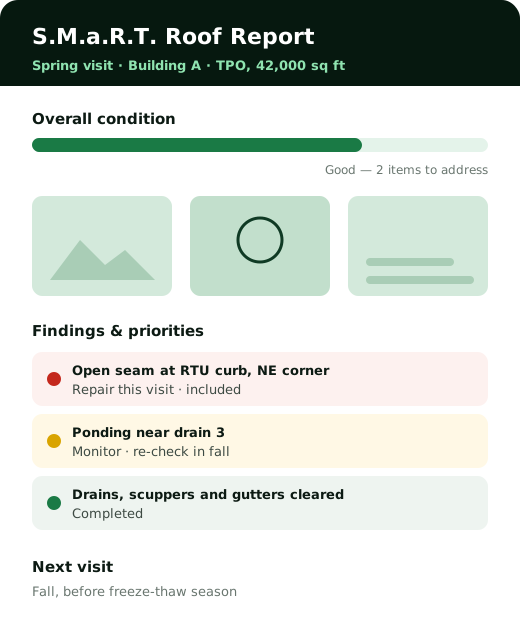
- Report. Overall condition, photos of every finding located on a roof plan, what we fixed and a prioritized list of what's next.
Systems we maintain
Single-ply TPO and EPDM, smooth and gravel built-up roofing, metal and spray polyurethane foam, whether or not Truman installed the roof.
Keeping your warranty valid
Many manufacturer warranties make the owner responsible for maintaining the roof. Typical conditions include periodic inspections, clear drains, prompt written notice of leaks, and repairs made by a contractor the manufacturer authorizes. When a claim is filed, the manufacturer may ask for proof that those conditions were met.
The program builds that proof as you go: dated reports, photos and a repair log for every visit. Before working on a warrantied roof, we check what the warranty requires so a repair never puts coverage at risk.
When we find something
Findings fall into three groups, and the report tells you which is which:
- Fixed during the visit, when the repair is covered by your level. You see it in the before-and-after photos.
- Fix soon. Larger repairs get a written quote with photos. Nothing beyond your level's scope happens without your approval.
- Plan for it. Aging items to budget for, with an expected timeframe, so a replacement shows up in next year's budget instead of as an emergency.
If a visit turns up signs of wet insulation, we may recommend an infrared moisture survey to map it before anyone decides on repairs.
Who it's for
One building, a portfolio or a whole community
Single buildings
Owners and facility managers who want one less thing to watch. Twice-a-year visits, a report you can file, and a roofer who already knows your roof when a leak call comes in.
Portfolios
Property managers with several buildings get one schedule, one contact and reports in the same format for every property, ready to forward to owners.
HOAs & multifamily
Building-by-building condition records that feed the reserve study, plus resident notices when crews need access. See HOA & multifamily roofing.
FAQs
Roof maintenance FAQs
How much does a maintenance program cost?
It depends on the roof's size, system, condition, access and the level you choose. We walk the roof first and then quote a fixed annual price per building, so there are no surprises during the year.
Which level should we choose?
Level 1 suits newer roofs in good shape. Level 2 fits most working commercial and association roofs, because small repairs made during the visit prevent most leaks. Level 3 is for older roofs and owners who need a roof survey for budgeting or a reserve study.
Is twice a year really necessary?
It's what the NRCA recommends for low-slope roofs, and on the Front Range the two visits do different jobs: spring repairs winter damage before hail season, and fall catches hail damage before freeze-thaw makes it worse. Add a visit after severe weather.
Do you maintain roofs you didn't install?
Yes. We maintain roofs regardless of who installed them. The first visit sets a baseline: roof plan, system, condition by section and any existing warranty.
What if we have a leak between visits?
Call us or report the leak. Because we have your roof plan, photos and history on file, the crew knows the roof before they climb the ladder.
Will maintenance satisfy our manufacturer warranty?
Our reports and repair logs are the kind of documentation manufacturers ask for. Requirements differ by warranty, so send us yours and we'll match the program to it.
Get a program quote
Send us the address and roof size if you know it. We'll walk the roof, recommend a level and send a fixed annual price. We reply within one business day.
- One building or a whole portfolio
- Roofs we didn't install are welcome
- Reports you can forward to owners and boards