Home / Commercial roofing / Built-up roofing
Built-up roofing in Denver: repair, restoration and replacement
Smooth and gravel-surfaced built-up roofs still cover a large share of older Denver-area offices, schools, warehouses and condo buildings. We repair them properly, restore them when the insulation underneath is dry, and replace them when it isn't.
How a built-up roof is put together
A built-up roof (BUR) is the original multi-layer flat roof. Crews lay down alternating layers of bitumen and reinforcing felt, usually three to five plies, over insulation or a deck. Each ply is set in hot asphalt from a kettle, or in a cold-applied adhesive. The layers bond into a single thick membrane, and the redundancy is the point: if the top ply is damaged, there are more plies below it still keeping water out.
The top of the roof is finished in one of two ways:
- Gravel-surfaced (tar and gravel): a heavy flood coat of bitumen with aggregate embedded in it. The gravel shields the bitumen from sun, adds fire resistance and takes foot traffic and hail better than a bare surface.
- Smooth-surfaced: a glaze coat of bitumen finished with a coating, often aluminum or a reflective white, or with a mineral-surfaced cap sheet. It's lighter and easier to inspect, but the surface is more exposed and needs recoating to stay healthy.
Older roofs may be built with coal tar pitch rather than asphalt. Coal tar works well on dead-level roofs because it self-heals in summer heat, but it isn't compatible with asphalt products, so repairs have to use the right materials. One of the first things we do on any built-up roof is figure out which bitumen it is.
Why built-up roofs fail in Colorado
Denver puts a built-up roof through more than most climates do. High-altitude sun oxidizes bitumen, freeze-thaw cycles work at every crack, chinook winds move loose gravel, and hail season runs from mid-April to mid-August. These are the failures we find most often:
Blisters
A blister is a pocket where the plies have separated, usually because air or moisture was trapped between them. Summer sun heats the pocket, the vapor expands and the blister grows. Small, intact blisters are often left alone and watched. Blisters that are cracked, soft, in a traffic path or growing get cut out and patched with new plies so they don't become leaks.
Alligatoring
On smooth-surfaced roofs, exposed bitumen dries out under UV and shrinks into a pattern of cracks that looks like alligator hide. Shallow alligatoring in the top coat can be cleaned and recoated. Once the cracks reach the felts, water gets into the plies and the repair gets larger.
Ridging and splits
Ridges are long, raised lines in the membrane, usually over the joints between insulation boards. They form when the insulation moves or when moisture condenses at the joints. Ridges are a stress point, and over time they can split. Splits also happen where the membrane crosses a deck joint or is restrained by flashing, especially after hard freezes.
Gravel scour
Wind and draining water push gravel away from corners, edges and drains, leaving bare bitumen behind. Along the Front Range, chinook gusts can strip a roof corner in a single winter. Bare spots oxidize quickly, then crack. Re-embedding gravel in a fresh flood coat is routine maintenance that's far cheaper than the damage it prevents.
Flashing failures
Most leaks on a built-up roof start at the edges and penetrations, not in the field. Base flashings at parapets dry out, slump and pull away from the wall. Pitch pans around pipes and supports lose their fill and open up. Counterflashings and coping joints loosen. Flashings take the most movement on the roof, so they age first.
Wet insulation
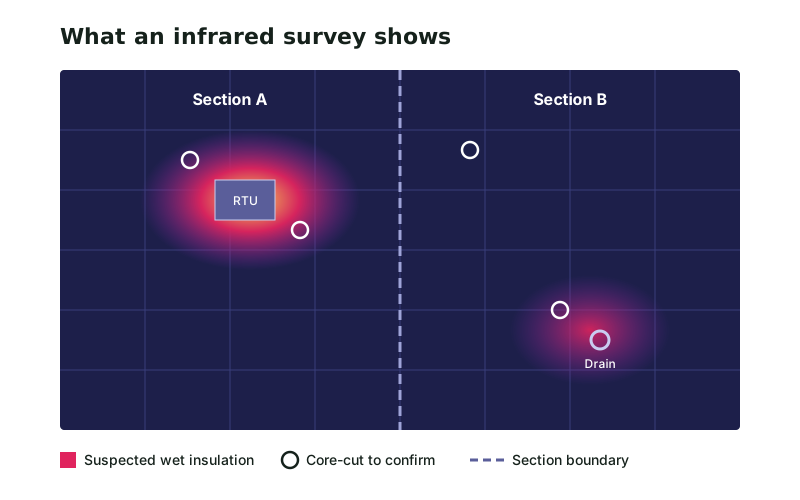
Every one of the problems above can let water into the insulation. Wet insulation loses its R-value, weighs more, stops the membrane from bonding and can corrode a steel deck. It's also invisible from the surface, which is why we don't price major work without checking for it.
Repair, restoration or replacement?
The right answer depends on how much of the roof is still dry and how much life the plies have left. We start with a walk of the roof, an infrared moisture survey and core cuts to confirm what's underneath. Then we lay out the options side by side:
| Option | When it fits | What's involved |
|---|---|---|
| Targeted repair | The roof is mostly sound, with isolated leaks, blisters or flashing problems. | Cut out and re-ply damaged areas, rebuild failed flashings, refill pitch pans, re-gravel bare spots. |
| Restoration | The plies are intact and the insulation is mostly dry, but the surface is worn, oxidized or scoured. | Repair defects, replace small wet areas, then a new flood coat and gravel, or a compatible coating on a smooth roof. |
| Recover | The existing roof is dry and code allows another layer. | Loose gravel is removed, the surface is prepared and a new roof system is installed over it. |
| Tear-off and replacement | Widespread wet insulation, failed plies, multiple existing layers, or deck damage. | Remove to the deck, repair the deck, add insulation to current code and install a new system. |
Restoration is worth taking seriously. A gravel-surfaced roof with good plies can often be renewed with a fresh flood coat and gravel for a fraction of the cost of replacement, and some coating systems can carry a manufacturer warranty when the roof qualifies. What restoration can't do is fix wet insulation. Coating or re-graveling over a wet roof traps the water and shortens the life of the work.
What drives the cost of built-up roof work? How much of the roof is wet, whether gravel has to come off, the number of existing layers, the condition of the deck, how many penetrations and how much parapet flashing there is, how hard the roof is to reach, and the warranty you want. Our proposals break these out so a board or owner can see where the money goes.
What to replace a built-up roof with
When a built-up roof has reached the end, you have several good choices. We'll recommend one based on the building, not on what's easiest to sell:
- A new built-up roof. Still a strong choice where you want multiple plies of redundancy, heavy rooftop traffic or a gravel surface.
- TPO. A reflective, heat-welded single-ply membrane and the most common choice for new low-slope roofs. It's lighter than gravel, which can matter on older structures.
- EPDM. A flexible rubber membrane with a long track record in cold climates, well suited to roofs that move.
- Spray foam (SPF). A seamless, insulating roof that can sometimes go over a dry built-up roof once the loose gravel is removed, and can be sloped to fix ponding.
A tear-off is also the moment to add insulation. Energy code generally requires insulation to be brought up to current levels when a roof is replaced, which changes edge heights, flashing heights and sometimes drains. We account for that in the scope rather than finding it during the job.
Working on occupied buildings
Most of the built-up roofs we work on sit over people: offices, classrooms, clinics, shops and condo units. Built-up work involves hot bitumen, odor, noise and heavy tear-off debris, so planning matters as much as workmanship:
Survey and test
We map wet areas and identify the bitumen. Older roofs can include asbestos in felts, flashing cement or mastics, and Colorado's air quality rules can require an asbestos inspection before those materials are disturbed. We test where it's required, before tear-off is scheduled.
Plan the site
Kettle location, crane or hoist position, debris chutes, and protected entrances and walkways. Many fire departments regulate kettles and hot work, and we handle those permits along with the building permit for your city.
Control odor and air intakes
We coordinate with your facility staff to shut down or protect rooftop air intakes near the work, and use cold-applied or low-odor products where odor would be a problem, such as near clinics or schools in session.
Stay watertight every night
We only tear off what we can close up the same day. Every evening ends with temporary tie-ins so the building is protected if weather moves in.
Communicate and close out
Tenants or residents get advance notice of noisy days and access changes. At the end you get photos, warranty documents and a final walk. We don't collect final payment until you sign off.
For associations, we also handle resident notices and parking changes, and sequence buildings to match reserve funding. See our HOA and multifamily roofing page for how that process works.
Maintaining a built-up roof
A built-up roof rewards maintenance more than almost any other system. Most of its failures start small and get worse slowly, so regular visits catch them while they're cheap. The NRCA recommends inspecting low-slope roofs at least twice a year and after severe weather. Along the Front Range that means spring, after the snow and before hail season, and fall, before freeze-thaw.
On a built-up roof, a good visit includes:
- Clearing drains, scuppers and gutters, and checking for ponding
- Checking for bare spots and gravel scour at corners, edges and drains
- Marking and measuring blisters so growth can be tracked
- Inspecting base flashings, counterflashings, coping and pitch pans
- Looking for alligatoring and coating wear on smooth surfaces
- Checking around rooftop units, where service traffic damages the surface
- A written report with photos and prioritized repairs
Our S.M.a.R.T. maintenance program covers built-up roofs at all three levels, from Clear & Check to Survey & Repair, whether or not we installed the roof. After a hailstorm, our post-hail checklist covers what to look for and when to call.
Built-up roofing FAQs
How long does a built-up roof last in Denver?
A well-built, maintained built-up roof can last decades, but the range is wide. The number of plies, the surfacing, how well the gravel stays in place and how quickly flashing problems are fixed all affect it. Smooth-surfaced roofs need recoating to reach their full life. A survey tells you how much life your roof has left.
Is a blister on our roof an emergency?
Usually not. Small, firm, intact blisters are common and are often monitored rather than cut. A blister becomes a priority when it's cracked, soft underfoot, in a walkway or growing between inspections. If you're seeing water inside, call us first at (720) 296-0000.
Can you coat our gravel roof instead of replacing it?
Sometimes. Loose gravel has to be removed or the surface properly prepared first, and the insulation underneath has to be dry. If those conditions are met, a coating or a new flood coat and gravel can add years. If the roof is widely wet, coating over it traps the water and we'll tell you so.
Can a new roof go over our existing built-up roof?
It depends on what's underneath. Building codes limit how many roof layers you can have, wet insulation must come out, and loose gravel has to be removed before anything goes over it. An infrared survey and core cuts tell us whether a recover is allowed and whether it's a good idea.
Does our old roof contain asbestos?
Some older built-up roofs do, most often in felts, flashing cement or mastics. You can't tell by looking. Where Colorado rules require it, we have the roofing materials tested before tear-off and plan the work around the results.
Will the kettle smell get into our building?
Hot asphalt does have an odor. We plan kettle placement and work sequence around your air intakes, coordinate with your facility staff to manage rooftop units, and use cold-applied or low-odor products where odor would be a real problem.