Home / Commercial roofing / TPO
TPO roofing in Denver: installation, repair and re-roofs
A heat-welded, reflective single-ply membrane for offices, warehouses, retail centers and multifamily buildings. Built with the right cover board, attachment and thickness, it stands up to Colorado hail, high-altitude sun, chinook winds and heavy spring snow.
What TPO is
Thermoplastic polyolefin (TPO) is a single-ply roofing membrane reinforced with a polyester scrim and manufactured to the ASTM D6878 standard. It is laid over insulation and a cover board, and every overlap is joined with a robotic hot-air welder that fuses the two sheets into one piece, so a properly welded seam is as strong as the sheet around it.
Because TPO is a thermoplastic, it can be welded again years later, so repairs and additions are welded in rather than glued and caulked. Most TPO is white and reflects much of the summer sun. At Denver's elevation, where ultraviolet exposure is stronger than in sea-level cities, that reflectivity protects the membrane as much as it lowers cooling loads.
TPO has become the most common choice for new low-slope commercial roofs, but it isn't right everywhere. Restaurant grease attacks it, and its life depends heavily on how the rest of the assembly is built.
How a TPO roof is assembled
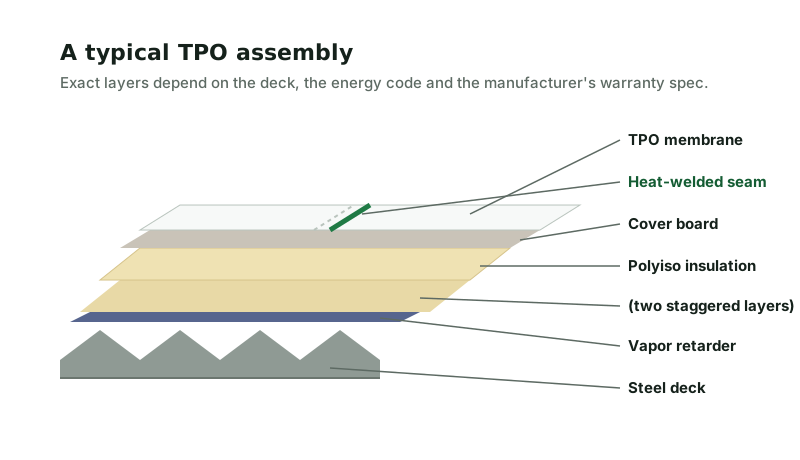
From the structure up, a typical Denver TPO roof includes:
- Deck: steel, wood, concrete or, on older buildings, gypsum. The deck decides which fasteners and adhesives we can use.
- Vapor retarder: where humid interior air could condense inside the roof in winter, as over pools and commercial kitchens.
- Insulation: polyiso in two or more layers with staggered joints, so heat can't escape through straight gaps.
- Tapered insulation and crickets: built-in slope that moves water to drains instead of letting it pond.
- Cover board: a thin, dense board that protects the insulation from hail, foot traffic and dropped tools.
- Membrane, flashings and edge metal: the TPO sheet, welded flashings at walls, curbs and penetrations, and tested edge metal at the perimeter.
Building TPO for Colorado weather
Hail
Front Range hail season runs from about mid-April to mid-August. Hail rarely punches straight through TPO. More often it crushes the insulation or fractures its facer, leaving a soft spot that flexes underfoot until the membrane cracks. The defenses are a dense cover board, a thicker membrane and attachment that keeps the sheet tight to the board. Some owners and insurers ask for assemblies with FM Approvals hail ratings, and some manufacturer warranties cover hail up to a stated diameter when the roof is built to their spec.
UV and heat at altitude
Sun wears TPO from the top down. What protects the scrim is the layer of membrane above it, so thickness over the scrim matters more than the number printed on the roll. Flashings on south-facing parapets and around reflective rooftop equipment take the hardest exposure and get extra attention during maintenance.
Wind uplift
Chinook winds along the foothills, from Boulder through Golden and Lakewood, and thunderstorm outflow on the plains both pull at roofs. Uplift is strongest at corners and perimeters, so a correct design adds fasteners or adhesive there based on the building's height, exposure and code wind speed, using an assembly tested to the required rating. The building code also requires tested edge metal (ANSI/SPRI ES-1) on low-slope membrane roofs, because most wind failures start at the edge.
Snow, ice and freeze-thaw
Spring storms bring heavy, wet snow that drifts against parapets and rooftop units. Frozen drains back meltwater up against flashings, and freeze-thaw cycles work at every termination bar and sealant joint. We design crickets to keep meltwater moving and set walkway pads where people and shovels travel. Ice chippers and steel shovels cause many of the TPO punctures we repair.
Attachment methods compared
How the membrane is held down affects wind rating, hail behavior, cost and how late in the year we can install. The right choice depends on your deck, exposure and warranty.
| Method | How it's held down | Strengths | Trade-offs in Colorado |
|---|---|---|---|
| Mechanically fastened | Screws and plates along each seam, covered by the next sheet's welded lap | Fastest to install; lower cost; few temperature limits | The sheet can billow between rows in high wind; fasteners through soft insulation are more vulnerable under hail |
| Induction welded | Plates fastened through the insulation; the membrane is bonded to the plate tops with an induction tool | No penetrations through the membrane; wider sheets and fewer seams; good uplift ratings | Specialized equipment; some sheet movement between plates |
| Fully adhered | Bonding adhesive on the cover board and the back of the membrane | Strongest hail and wind performance; no billowing; quiet | Higher cost; adhesives have temperature limits that matter in winter; needs a clean, dry substrate |
| Fleece-back adhered | Fleece-backed membrane set in low-rise foam adhesive or bonding adhesive | Toughest against hail and punctures; tolerates rougher substrates; a strong recover option | Highest material cost; foam adhesives have temperature and humidity windows |
Choosing a membrane thickness
TPO is sold by total thickness, measured in mils (thousandths of an inch):
- 45 mil: the industry minimum. We rarely recommend it on hail-exposed Front Range roofs.
- 60 mil: the most common choice, and a sound baseline with a cover board and good attachment.
- 80 mil: more weathering material over the scrim and better puncture resistance, for long warranty terms and heavy hail exposure.
- Fleece-backed and extra-thick: for heavy foot traffic or the most hail resistance available.
Longer manufacturer warranty terms usually require thicker membranes, so thickness and warranty are best chosen together.
TPO repair
The repairs we make most often are underwelded seams that a seam probe would have caught at installation; punctures from HVAC screws, dropped tools and snow shovels; hail fractures over crushed insulation; failed flashings at curbs, pipe boots and pitch pans; loose edge metal after wind; and ponding at clogged drains.
Most repairs are welded patches, which outlast sealant by years. Older TPO gets harder to weld, so we clean and prepare the surface and run test welds first. When a membrane won't take a reliable weld anymore, that says something about its remaining life, and we'll tell you. A patch over wet insulation doesn't fix a leak, so we replace saturated insulation before closing the roof. If water is coming in now, report the leak or call (720) 296-0000 first.
Recover or tear-off?
A recover installs new TPO over the existing roof, usually with a cover board between. It avoids most tear-off and disposal cost and keeps the building drier during the work. The building code generally doesn't allow a recover over wet or deteriorated materials or over two existing roofs, so we confirm the roof qualifies, test fastener pullout on the deck and check flashing heights at doors and curbs.
A tear-off makes sense when insulation is widely wet, when there are already two roofs, when the deck needs repair or when you want to meet the current energy code. It also exposes the deck, which matters on older steel decks where hidden leaks may have caused rust. The deciding fact is usually moisture, and an infrared moisture survey confirmed with core cuts shows exactly which areas are dry.
Insulation and the energy code
The Denver metro is in IECC climate zone 5B. When a roof is replaced, rather than recovered, and the insulation sits entirely above the deck, the energy code generally requires current insulation levels. Under recent IECC editions that is roughly R-30 of continuous insulation, or several inches of polyiso.
That thickness raises the roof surface, which can mean raising curbs, rooftop units, hatches and edge metal. Each Front Range city and county adopts its own code edition and amendments, and Denver's green building rules can add requirements for larger buildings when the roof is replaced. We confirm what applies before we price.
TPO warranties, explained
"Warranty" means three different things on a commercial roof, and proposals don't always say which one you're getting:
| Warranty | Who stands behind it | What it covers | What to watch |
|---|---|---|---|
| Workmanship | Truman Roofing | Installation errors: seams, flashings, terminations and details, for the term written in our proposal | Covers our work, not material defects |
| Manufacturer material | The membrane manufacturer | Defects in the membrane itself | Usually material only, with no labor; may be prorated; doesn't cover installation |
| NDL system | The manufacturer, through an approved applicator | Leaks from material or workmanship defects across the whole system, including labor, with no dollar limit | Requires an approved spec, a manufacturer inspection, registration and documented maintenance |
Truman is an approved applicator able to offer extended manufacturer warranties on commercial projects. A no-dollar-limit (NDL) warranty can often be upgraded with hail coverage to a stated size or a higher wind speed rating. Every warranty excludes something, so read the hail and wind language before you sign.
Common ways warranties get voided: repairs by unauthorized contractors, penetrations cut by other trades for HVAC or solar, leaks that go unreported, and missing maintenance records. Before anyone cuts into a warranted roof, call the roofer who holds the warranty.
What drives the cost of a TPO roof
Two TPO roofs of the same size can differ widely in price. The main drivers:
- Tear-off: how many layers come off and disposal.
- Hidden conditions: wet insulation and deck repairs, which our proposals price as unit costs so there are no surprise change orders.
- Insulation: code-required thickness plus tapered insulation for drainage.
- Membrane and attachment: thickness, fleece-back, fastened or adhered.
- Details: curbs, rooftop units, penetrations, drains and parapet length.
- Access: building height, crane picks, staging and occupied-building logistics.
- Warranty and season: longer NDL terms cost more, and winter work can take longer.
See commercial roof cost factors for more.
Maintaining a TPO roof
NRCA recommends inspecting low-slope roofs at least twice a year and after severe weather: on the Front Range, in spring before hail season and in fall before freeze-thaw. We probe seams, check flashings and termination bars, clear drains, look for punctures and clean off debris that holds water. HVAC service is the most common source of TPO damage we find, so we look hardest wherever other trades have worked. Our S.M.a.R.T. program does this on a schedule, with a written report that doubles as the maintenance record many warranties require.
How Truman runs a TPO project
Roof survey
We measure, photograph and core the roof, and add infrared or drone imagery when the roof is large or the decision is costly.
Options and proposal
Repair, recover and replacement side by side, with line items and unit prices for hidden conditions.
Submittals and permits
Manufacturer approval for the warranty, uplift design for your building, and the permit from your city or county.
Pre-construction plan
Staging, crane picks, tenant or resident notices, rooftop unit disconnects and our fall protection plan.
Tear-off and dry-in
We open only as much roof as we can make watertight by the end of the day.
Install and check
Test welds at every start-up and temperature change, and daily seam probing.
Closeout
Manufacturer inspection, punch list, photo record and warranty documents. Final payment waits for your sign-off.
Estimating and construction are led by Andrew Rickert, our Operations Manager, a CPA with a Class-A general contractor license who has been with Truman since 2009. We work as a pre-qualified roofing subcontractor for Front Range general contractors, so schedules, submittals and trade coordination are routine for us.
TPO roofing FAQs
How long does a TPO roof last in Colorado?
A well-built, maintained TPO roof commonly lasts 20 years or more. Membrane thickness, cover board, hail exposure and maintenance all move that number.
Can TPO be installed in winter?
Yes. Hot-air welding works in the cold with adjusted settings and more test welds. Adhesives have minimum temperatures, so for adhered systems we schedule around warmer days or use cold-weather products.
What size hail can a TPO roof handle?
There's no single number. It depends on membrane thickness, cover board, attachment and the age of the roof. Some manufacturer warranties cover hail up to a stated diameter when the roof is built to their hail spec, and we can price that option for you.
Will a white TPO roof lower our energy bills?
For most air-conditioned commercial and multifamily buildings, yes. A reflective roof cuts summer heat gain. The insulation does more for winter heating costs, which is why we look at both together.
Can you repair a TPO roof another contractor installed?
Yes. If the roof is still under a manufacturer warranty, repairs usually have to be made by an authorized contractor and reported to the manufacturer. We check the warranty status first so a repair doesn't put your coverage at risk.
Do we have to tear off the old roof?
Not always. If the existing roof is dry, structurally sound and only one layer deep, a recover can save tear-off cost. We confirm with a moisture survey and core cuts before recommending it.
Can our tenants or residents stay during the work?
Yes. We plan noise, odors, staging and access around business hours and residents, give you notices to send out, and keep rooftop units off only when they must be.