Why hidden moisture matters
On a low-slope commercial roof, the membrane is only the top layer. Beneath it are insulation boards, often a cover board, and the structural deck. When water gets through a split seam, a failed flashing or a hail puncture, it doesn't run off. It soaks into the insulation and spreads.
Wet insulation causes problems well beyond the leak you can see:
- Lost insulating value. Wet insulation conducts heat, which raises heating and cooling costs.
- Added weight. Saturated insulation can hold a surprising amount of water, adding load to the structure.
- Corrosion and decay. Trapped water rusts steel decks and fasteners and rots wood decks and nailers.
- Freeze-thaw damage. Along the Front Range, water in the roof system freezes and thaws many times each winter, breaking down insulation and facers and pushing on seams.
- Lost options. Most codes don't allow a new roof to be installed over wet insulation, and manufacturers won't warrant a recover or a coating over it.
The trouble is that you can't see wet insulation from the surface, and leaks inside rarely show up directly below the entry point. That's what an infrared survey is for.
How an infrared survey works
An infrared camera doesn't see water. It sees surface temperature. The survey relies on the fact that wet insulation holds heat much longer than dry insulation.
The sun loads the roof
On a clear, dry day, sunlight warms the whole roof assembly. Wet areas absorb and store more of that heat because water has a much higher heat capacity than dry insulation.
The roof cools after sunset
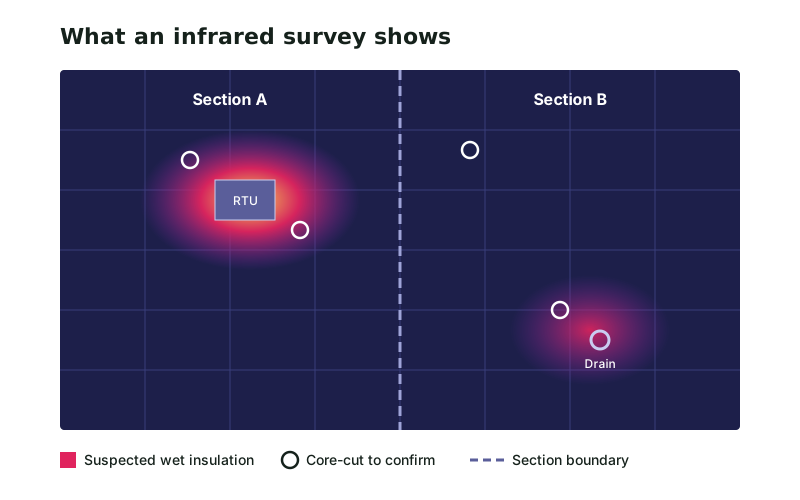
Once the sun goes down, dry areas lose their heat quickly. Wet areas stay warm for hours and show up as distinct warm patterns on the thermal image.
The thermographer scans and marks
A trained technician scans the roof in the evening, either walking it with a handheld camera or from the air, and marks the outline of each suspect area on the roof surface.
Core cuts confirm
Small cores are cut through suspect areas and nearby dry areas to confirm what's underneath. Each core is patched the same day.
Findings are mapped
Wet areas are drawn on a roof plan, measured, and paired with thermal and visible-light photos in a written report.
ASTM C1153, the standard practice for locating wet roof insulation with infrared imaging, describes this approach and the conditions that make it reliable.
Conditions matter, especially in Colorado
Infrared surveys depend on weather. A good survey night usually follows a sunny day, with a dry roof surface, light wind and no rain. Our climate helps more often than it hurts: Denver's dry air and frequent clear skies make for good survey conditions much of the year. But a few local patterns get in the way:
- Summer afternoon storms. A thunderstorm late in the day leaves surface water that masks the readings, so we reschedule.
- Snow and frost. Snow cover blocks the scan, and short winter days may not load the roof with enough heat.
- Wind. Strong wind cools the surface evenly and washes out the contrast between wet and dry areas.
- Ponded water and debris. Standing water and debris piles create false warm spots, so drains are cleared first where possible.
Spring and fall evenings are often ideal. We watch the forecast and confirm the day before.
What infrared can and can't see
Infrared works best on roofs with absorbent insulation, such as fiberboard, perlite and fiberglass, under a membrane or smooth surface. It's less conclusive in some situations:
- Closed-cell insulations such as polyiso and spray foam absorb less water, so the thermal signal can be weaker. Wet areas are still often visible, but cores become more important.
- Ballasted and heavy gravel roofs hold heat in the stone, which can hide what's underneath.
- Metal roofs reflect infrared and aren't good candidates.
- Multiple roof layers make it harder to tell which layer is wet.
When infrared isn't the right tool, we'll say so before you pay for it. Other methods include capacitance or impedance meters, which read moisture through the membrane on a grid, and systematic core cuts. Electrical leak detection is a different tool that finds breaches in the membrane rather than wet insulation, and it's useful for locating the source of an active leak.
Walk-on, drone or both
A handheld survey on foot is thorough and lets the thermographer mark suspect areas as they go. A drone survey covers large roofs quickly and produces an overhead image that's easy to read in a board packet or capital plan. On big or complex roofs, we often use both: the drone for the overview and a walk-on crew to mark and core the suspect areas.
What we need from you
A survey runs smoothly when a few things are lined up in advance:
- Evening roof access. The scan happens after sunset, so we need a way onto the roof after hours. Let security, tenants or residents know a crew will be up there.
- Roof drawings, if you have them. Plans help us draw an accurate map, though we can create one if none exist.
- Leak history. Where leaks have shown up inside, and when, helps us interpret warm areas on the scan.
- Past roofing records. Install dates, previous repairs and warranty documents tell us what layers to expect in the cores.
Weather is the main variable. If conditions on the scheduled evening won't give reliable results, we'll move the date rather than deliver a survey you can't trust.
What you receive
- A roof plan showing sections, drains, penetrations and each wet area
- An estimate of wet area for each section
- Thermal images paired with matching daylight photos
- Core cut results describing the layers found and their condition
- Recommendations ranked by priority, with repair pricing
- A remaining-life estimate and replacement budget range
How the results change the decision
The survey's main value is that it turns a vague "the roof is old" into a decision you can price.
| What the survey shows | Typical next step |
|---|---|
| Little or no wet insulation | Repair defects and keep the roof on a maintenance schedule. A restoration coating or recover may be an option. |
| Wet areas in a few locations | Cut out and replace the wet sections, repair the cause, then consider a recover or restoration over the dry roof. |
| Wet insulation across much of the roof | Plan a full tear-off and replacement. Covering it isn't allowed under most codes and won't be warranted. |
On a large roof, replacing a modest share of wet insulation and keeping the rest can cost far less than a full tear-off. Without a survey, a contractor has to guess, and guesses tend to be conservative and expensive, or optimistic and short-lived.
When to schedule a survey
- Before buying a building, so the roof's real condition is part of the deal.
- Before choosing a recover or coating, to confirm the roof is dry enough to keep.
- After a hailstorm, to find new wet areas that aren't leaking yet. See our guide to the first 72 hours after hail.
- Before a reserve study or capital plan, so the budget reflects what's under the membrane.
- When leaks keep coming back despite repairs.
- As a baseline on a newly acquired or newly maintained roof, to compare against later.
Survey and maintenance together. Level 3 of our S.M.a.R.T. program, "Survey & Repair," includes a full inspection and roof survey along with medium general repairs, so moisture is tracked over time instead of discovered all at once.
Infrared survey FAQs
Why are infrared surveys done in the evening?
The method relies on wet insulation releasing stored heat more slowly than dry insulation after the sun goes down. Daytime sun heats everything, which hides the difference.
Do the core cuts damage the roof?
Cores are small and are patched the same day with materials compatible with your membrane. They're the only way to confirm what the thermal image suggests.
Can you survey a roof with snow on it?
No. Snow, frost and standing water block the readings. We schedule after the surface is clear and dry, usually following a sunny day.
Will a survey find the source of our leak?
It shows where the insulation is wet, which usually points toward the source. Pinpointing the exact breach may take a close inspection or electrical leak detection.
Is a drone survey enough on its own?
On large roofs it's a fast way to map suspect areas, but core cuts are still needed to confirm moisture before you make repair or replacement decisions.