
Home / Resources / Ponding water
Ponding water on a flat roof: causes, risks and fixes
A little water after a storm is normal. Water that's still standing long after the rain stops is a warning. Something in the roof's drainage, structure or insulation needs attention. Here's how to tell the difference, and what fixes it.
What counts as ponding water on flat roofs?
"Flat" commercial roofs are really low-slope roofs, built with a slight pitch toward drains, scuppers or gutters. After rain or snowmelt, the water should run off, and what's left should evaporate once the sun comes out. Ponding is the water that stays.
Roofers and membrane makers define ponding by how long water stays on the roof after the rain stops. Many manufacturer warranties use that definition to exclude damage from standing water. Check your own warranty, since its wording is what counts.
Not all standing water is equal. Small, shallow puddles that dry quickly in the sun are common on older roofs and usually minor. Ponds that are wide, deep, growing from year to year, or back after every storm are a problem worth fixing.
How to spot ponding, even on a dry day
Standing water leaves evidence behind after it evaporates:
- Dirt rings and silt outlines on the membrane, showing the shape and depth of the pond
- Algae, moss or small plants growing in low areas
- Gravel and debris collected in one spot on a built-up roof
- Ice sheets in the same places every winter
- Sagging inside, such as a ceiling that dips between columns or stains near the middle of a bay
The easiest way to see the whole pattern is to look right after a rain. On large roofs, a drone roof inspection shows every pond at once from overhead. The images also give you a record to compare year to year.
What causes ponding on a commercial roof
Ponding almost always comes from one of a handful of causes, and each has a different fix:
| Cause | What it looks like | Typical fix |
|---|---|---|
| Clogged drains or scuppers | Water around the drain, debris packed against the strainer | Clear drainage and keep it on a maintenance schedule |
| Drains not at the low points | Water sitting beside a drain or between two drains | Crickets and saddles to steer water; sometimes a new or relocated drain |
| Too little slope | Wide, shallow ponds across the field of the roof | Tapered insulation, usually at replacement |
| Deck deflection | Ponds in the middle of a bay that get deeper over time | Structural evaluation first, then slope correction |
| Crushed or wet insulation | Local dips after hail or around heavy foot traffic | Cut out and replace the damaged insulation |
| Curbs and units blocking flow | Water trapped on the upslope side of rooftop equipment | Crickets behind curbs |
| A recover that raised the roof | Water held back at drains or scuppers that now sit too high | Drain sumps, lowered scuppers or added drainage |
| Patches and equipment that dam water | Water held behind a raised patch or repair, or a wet spot where condensate lines discharge | Rework the repair flush with the roof; pipe condensate to a drain |
| Frozen drains | Meltwater backed up in winter, ice in the same spots | Fall drain cleaning, overflow drainage, heat tape where it's used |
Older buildings often have more than one cause at once. Picture a deck that has sagged a little, a drain set slightly high and a strainer full of leaves. Together, they can hold a surprising amount of water. Roof drainage systems have several parts, and our guide to flat roof drainage: drains, scuppers, gutters and crickets covers how each one is supposed to work.
Why standing water is a problem
- The membrane wears faster. Water, sun and the dirt that settles in ponds age a membrane faster than the rest of the roof. Coatings and sealants under water break down sooner too.
- Leaks under pressure. A seam or flashing that would shed water on a slope will leak the whole time it sits under a pond. Small openings that never mattered start to.
- Weight. Water is heavy. A pond adds load, the deck deflects a little more, and the low spot holds more water the next time. Combined with a Colorado snow load, that cycle deserves attention.
- Freeze-thaw. Ponds freeze into ice sheets that grip the membrane, work at seams and make the roof dangerous to walk.
- Debris and plants. Ponds collect silt, which grows algae and plants, which hold more water and clog drains.
- Warranty exclusions. Many manufacturer warranties don't cover damage caused by ponding.
Call promptly if ponds are getting deeper or a ceiling is sagging below a pond. The same goes for water near the top of a roof edge or parapet, or overflow scuppers that run in ordinary storms. Those can point to a blocked drain or a structural concern. Keep people off that area of the roof and out from under it. Have both a roofer and a structural engineer look at it.
Ponding through a Colorado winter
Ponding gets worse in winter here. Heavy, wet spring snow drifts against parapets and rooftop units. A sunny afternoon or a chinook warm spell melts it. The meltwater runs toward drains that are still frozen or packed with fall leaves.
Then it backs up, refreezes overnight and repeats. Water that would have drained in summer ends up sitting against flashings and seams for long stretches of the winter.
Fall flat roof maintenance matters most for this. Clearing drains, scuppers and gutters before the first freeze, and checking that overflow drains are open, prevents much of the winter ponding we see. Steel shovels and ice chippers cause many of the punctures we find in ponded areas. If snow has to come off your roof, use a crew that knows where the membrane is.
Fixing ponding, from simplest to biggest
Clear and maintain drainage
Many ponds are just a clogged drain. Clean drains, put missing strainers back and check them after storms. After hail, drains often clog with ice, granules and debris. Our S.M.a.R.T. maintenance program includes drain, scupper and gutter cleaning at every visit.
Replace crushed or wet insulation
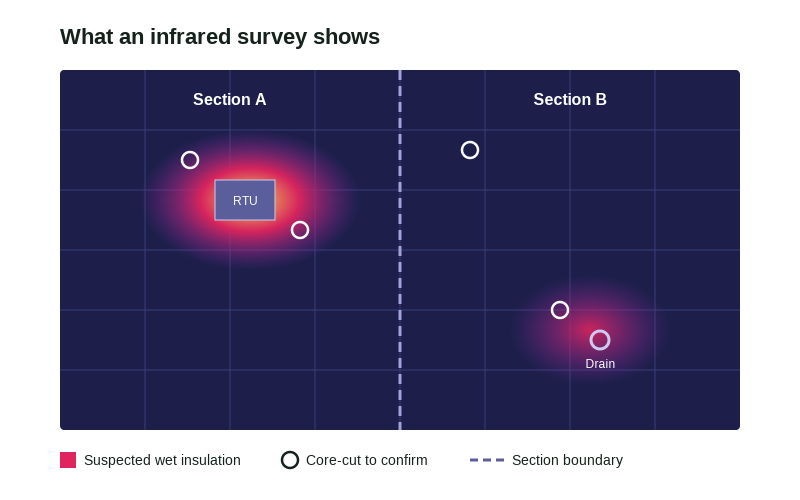
Dips caused by hail or foot traffic are fixed by cutting out the damaged insulation and replacing it. An infrared moisture survey shows how far the wet area reaches.
Add crickets and saddles
Tapered insulation built up behind curbs, between drains and along parapets steers water to the drains. On many roofs this can be done in a targeted repair without replacing the roof.
Add or move drains and overflows
When water has nowhere to go, a new drain or overflow scupper may be the answer. That's plumbing and sometimes structural work, and it generally needs a permit, so check with your city's building division.
Correct the slope at replacement
A tear-off is the time to design a full tapered insulation system. Replacements generally have to meet current energy-code insulation levels anyway, so slope can be built in. On some dry roofs, a spray foam recover can be applied thicker in low areas to drain.
Fix the structure
Has the deck sagged? Have a structural engineer check it before anything adds more weight, whether that's new insulation, snow or standing water.
Coatings don't cure ponding. Not every coating is made to sit under standing water, and none of them adds slope. If someone proposes a coating over a roof that ponds, ask how the water will leave.
What to do about the ponds on your roof
Start a simple record: photos after a rain, the locations marked on a roof plan, and a note of how long the water stays. Keep drains clear, and keep staff off the roof in wet or icy weather. Then have the roof inspected so the cause, not just the water, gets fixed. Ponding is also a leak risk. If water is already coming in, read our guide to why commercial roofs leak and how the source is found.
We inspect and repair low-slope roofs on offices, warehouses and HOA buildings across the Denver metro. That includes commercial roofing in Aurora and Centennial, on every system on our commercial roofing pages. Request an inspection and we'll show you where the water sits, why it stays and what each fix involves.
Ponding water FAQs
How much ponding is too much?
There's no single size. Water that stays long after the rain, ponds that are wide or deep, and ponds that grow over time are all worth fixing. Your manufacturer warranty defines ponding in its own terms, so check it, and have the roof inspected if you're unsure.
Will ponding void our roof warranty?
It may not void the whole warranty. But many manufacturer warranties won't cover damage that ponding water causes, so check yours. Fixing drainage protects both the roof and your coverage.
Can we just add a drain?
Sometimes. Often a cricket that steers water to an existing drain solves the problem for less. A new drain means plumbing, possibly structural work and a permit, so it's worth confirming the cause first.
Is ponding a structural problem?
It can be. Water adds weight, and a deck that deflects holds more water over time. If ponds are deepening or a ceiling below is sagging, have a structural engineer evaluate the deck.
Should our staff sweep the water off?
Keep staff off the roof, especially in wet or icy conditions. Pushing water around doesn't fix the cause, and brooms, shovels and boots can damage the membrane. Clearing the drain and correcting the slope is the fix.