
Home / Resources / Emergency roof repair
Emergency commercial roof repair: what to expect
When water is coming through the ceiling or a storm has opened the roof, the first job is to stop the damage. Here's what an emergency repair involves, what it doesn't fix, and what you can set up now so the next one goes faster.
Water coming in now? Call us first at (720) 296-0000, then send a leak report with the address, where the water is and how to reach the roof.
What counts as a roof emergency
Not every roof problem calls for urgent roof repair. Treating every stain as an emergency wears out everyone involved. The question is whether waiting will cause more damage or put people at risk.
| Situation | Emergency? | What to do |
|---|---|---|
| Active leak over people, electrical equipment, server rooms or inventory | Yes | Make the area safe, contain the water and call |
| Membrane torn, peeled back or blown off by wind | Yes | Keep people away from the building edge and call |
| Loose edge metal, coping or flashing flapping in the wind | Yes | Keep the area below clear; loose metal can fall |
| Broken skylight or hatch | Yes | Block the area below and call |
| Water ponding deep at a clogged drain, or heavy drifted snow | Often | Call; standing water and snow add weight fast |
| A new ceiling stain, but no active drip | Soon, not tonight | Note the location and date, and schedule a visit |
| Hail dents or debris on the roof, no leaks | No, but don't wait long | Schedule an inspection and document the storm |
If water is coming in right now
Before anyone thinks about the roof, deal with the building. Shut off power to wet fixtures and equipment. Keep people out from under sagging ceilings. Put down buckets and plastic, and move what you can.
Mark each drip point with tape so the crew can match it to the roof above. Keep staff off the roof, especially during a storm. For a step-by-step list, see our guide to what to do first when a commercial roof leaks.
When you call or report the leak, have a few details ready. Give the address and building, and say where the water is inside. Note when it started, what the weather was doing and how much water there is. Then tell us how the crew gets on the roof.
What an emergency repair is, and isn't
In an emergency, you're getting a temporary roof leak repair. Its job is to stop water, make the roof safe and prevent more damage until a permanent repair can be made. Depending on what failed, that might mean:
- A temporary patch or temporary membrane over a puncture, split seam or hail fracture
- Securing a tear or blow-off so wind can't peel back more of the roof
- Re-fastening or removing loose edge metal and coping before it falls or catches the next gust
- Covering a broken skylight or damaged hatch
- Clearing clogged drains and scuppers so standing water can leave the roof
- Sealing an open flashing at a wall, curb or pipe
What it isn't is the final fix. Temporary repairs are often made on wet, cold or snow-covered surfaces, where permanent materials won't bond properly. Sometimes they're made before the real source has been traced.
Water also travels under a membrane before it shows up inside, so the spot above the ceiling stain isn't always where the roof opened. To see why tracing the source matters, read our guide to why commercial roofs leak.
For the methods in more detail, see our guide to temporary repairs after a storm. Expect a second visit, in better conditions, for the permanent roof damage repair. That might be a welded or adhered patch, rebuilt flashing or replaced wet insulation, whatever the cause requires.
What to expect from the call to the fix
The call
We take the details: building, leak location, weather, access and who will meet the crew. Photos sent with an online leak report help the crew arrive with the right materials.
Make it safe
On site, the crew checks the interior below the leak, then the roof, with fall protection. Hazards come first: loose metal, open skylights, debris.
Stop the water
The crew finds the likely entry point and makes a temporary repair. If the source isn't clear in the storm, they protect the most likely areas and come back to trace it in dry conditions.
Document it
You get photos of the damage, the temporary repair and its location on the roof, with dates. That record matters for owners, boards, warranties and insurance.
Propose the permanent repair
A written scope for the permanent fix, with what caused the leak and anything else the crew saw that needs attention.
Make the permanent repair
Scheduled for weather and conditions that let the materials bond, then checked and photographed.
Why Colorado weather makes emergencies harder
- Hail season, mid-April to mid-August. One storm can damage dozens of roofs across the metro at once. Hail can open punctures and fractures that leak right away or months later.
- Chinook winds. Strong gusts along the Front Range lift membrane at corners and edges and pry up edge metal. Once wind gets under a roof, each gust can peel back more.
- Snow and freeze-thaw. Snow has to be cleared to find a winter leak, adhesives and sealants have temperature limits, and frozen drains back meltwater up against flashings. Heavy wet spring snow adds load quickly.
- UV at altitude. Sealant-dependent details dry out faster here, so a small opening that held last year may fail in the next storm.
Don't send staff up with shovels. Ice chippers and steel shovels cause many of the punctures we repair. If snow load or a frozen drain is the worry, call a roofing crew rather than clearing the roof yourself.
Insurance and warranties during an emergency
If hail or wind caused the damage, notify your insurance agent or carrier promptly. You're generally expected to take reasonable steps to prevent further damage. A temporary repair is one of those steps.
Take photos of the damage before and after the repair. Keep the invoice and any damaged parts that were removed. Hold off on permanent repairs until the adjuster has seen the roof, unless waiting would cause more damage. Policies vary, so check yours and ask your agent what applies.
To learn what to keep, see our guide to documenting hail damage. For uplift and blow-offs, read about wind damage to commercial roofs.
If your roof is under a manufacturer warranty, tell the roofer who holds it. Many warranties require prompt notice of leaks. You'll also need a contractor the manufacturer authorizes to make the repairs. So make that call before someone else cuts into your roof.
How to prepare before the next emergency
The fastest emergency repairs happen on roofs where the groundwork is already done. Put these in one place, and make sure the people who answer the phone after a storm know where it is:
- A roof plan and building list, with building numbers for a campus or community
- Access details: hatch or ladder location, keys and codes, and who meets the crew
- A contact list: your roofer, electrician, HVAC contractor and water mitigation company
- Warranty documents and the name of the contractor who holds the warranty
- Basic supplies: buckets, plastic sheeting, tape and a wet vacuum
- A notice template for tenants or residents: what happened, what's being done and where to report new water
For HOA communities, check your governing documents for who can approve emergency repairs between board meetings. Knowing that before a storm keeps a temporary repair from waiting on a vote. See how we work with managers and boards on our property managers and HOA and multifamily pages.
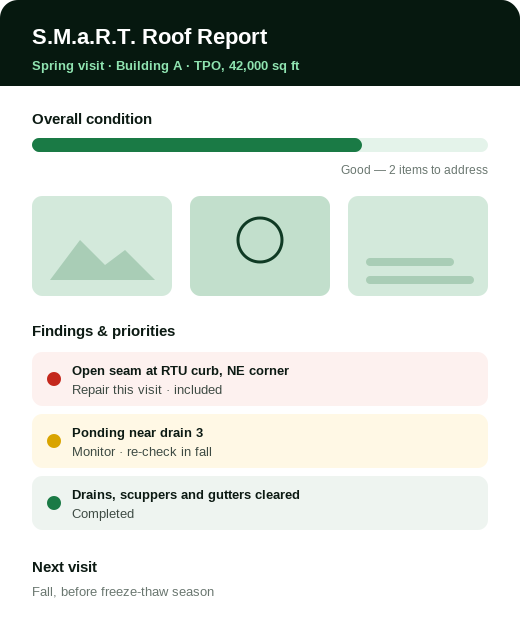
The best preparation is a roofer who already knows the roof. On our S.M.a.R.T. maintenance program, we clear drains before storm season and fix weak details before they fail. Your roof plan, photos and history stay on file, so the crew knows your roof before they climb the ladder.
What drives the cost of an emergency repair
Your cost depends on what failed and on the conditions. The main factors are the size and type of damage, the roof system, access and building height, and weather and snow cover. It also matters whether you need interior protection. And it depends on how much of the permanent repair the crew can make in the same visit. Expect the temporary and permanent repairs to be separate line items, and get both in writing.
We're based near the Denver Tech Center, and we repair commercial, HOA and multifamily roofs across the metro. See our commercial roofing in Centennial, or request an inspection to set up a roof plan before you need it. If water is coming in, call us first at (720) 296-0000 or report a leak.
Emergency roof repair FAQs
Is a temporary repair enough?
No. It stops water and prevents more damage, but it's often made in conditions where permanent materials won't bond. Plan on a permanent repair once the weather allows and the source has been traced.
Can our maintenance staff patch the roof themselves?
Inside the building, they can do a lot: shut off power, contain water and mark drip points. Keep them off the roof. Wet and storm-damaged roofs are slick, edges need fall protection, and mastic smeared over a membrane makes the real repair harder.
Will an emergency repair hurt our insurance claim?
Policies generally expect you to prevent further damage. Take photos of the damage before and after, and keep the invoice and any removed parts. Hold permanent repairs until the adjuster has seen the roof, unless waiting would make things worse. Ask your agent what your policy requires.
Will it affect our roof warranty?
Yes, it can. Under many manufacturer warranties, you have to report leaks promptly and use an authorized contractor for repairs. Call the roofer who holds your warranty first, or tell us about the warranty when you call.
Why does it help to have a roofer on file?
A crew that already has your roof plan, photos and repair history knows where the drains, curbs and weak spots are before it arrives. That makes a storm-night repair faster and more accurate.