
Home / Resources / Wind damage
Commercial roof wind damage: uplift, flashing and blow-offs
Wind rarely takes a roof off all at once. It starts at an edge, a corner or a loose flashing and works inward, one storm at a time. Here's how wind damages commercial and association roofs along the Front Range, what to check after a windstorm and how the repairs are made.
How does wind pull a roof apart?
When wind flows over a building, it speeds up as it crosses the roof edge and creates suction above the roof. At the same time, air that gets into the building or under the membrane pushes up from below. Together those forces are called uplift. Uplift is strongest at the corners, then along the perimeter, then in the middle of the roof, which designers call the field.
That's why wind damage on a low-slope roof usually follows the same sequence:
- Edge metal or coping loosens, often at a corner or a joint.
- Wind gets under the edge and starts lifting the membrane.
- The lifted membrane catches more wind, pulls at fasteners or adhesive, and peels back.
- Insulation and cover board are exposed, and sometimes blown off with it.
Most roofs never reach step four, but a roof that lost some edge metal in one storm is set up to lose more in the next.
Front Range wind is hard on roofs
Two kinds of wind do most of the damage around the Denver metro. Chinook winds come down the foothills in winter and spring, hitting buildings from Boulder through Golden and Lakewood with strong, gusty downslope flow. On the plains, summer thunderstorms throw out sudden outflow gusts and microbursts, often with hail in the same storm. A roof in the Denver Tech Center or Centennial sees mostly the second kind; a roof near the foothills sees both.
The rest of the Colorado climate makes it worse. UV at altitude dries sealants and ages membranes, and freeze-thaw opens any gap the wind created.
Where does wind damage start?
Edge metal and coping
The perimeter is the first line of defense and the most common failure. Look for edge metal that's raised, bent or missing, coping caps that have lifted or separated at joints, and fasteners that have backed out. That's why the building code requires tested edge metal (ANSI/SPRI ES-1) on low-slope membrane roofs. Most wind failures start at the edge.
Membranes at corners and perimeters
On single-ply roofs, watch for membrane peeled back from the edge and open laps near the perimeter. Also look for wrinkles or "fish mouths" where the sheet has shifted. On TPO roofs and EPDM roofs, a small opening at the edge lets wind pressurize the space under the sheet.
Attachment in the field
- Mechanically attached membranes can billow between fastener rows in high wind. Repeated flutter works fasteners loose, tears membrane at the plates and fatigues seams. Backed-out fasteners often show as small bumps under the sheet.
- Adhered membranes don't billow, but the bond can let go in patches. A loose area sounds hollow or lifts when pressed.
- Ballasted roofs rely on stone or pavers to hold the membrane down. Wind scours ballast from corners and edges, leaving bare membrane and sending stones into drains, onto other roofs or off the building.
Flashings, curbs and rooftop equipment
Counterflashings, termination bars and wall flashings loosen and let wind-driven rain behind them. Exhaust fan hoods, vent caps and access hatches blow open or off. Rooftop units that aren't anchored to their curbs can shift and tear the curb flashing. Satellite dishes and loose items left on the roof become debris.
Built-up, metal and spray foam roofs
On built-up roofs, wind scours gravel from corners and can lift cap sheets and base flashings at the perimeter. On metal roofs, panels lift at eaves and rakes, and ridge caps, trim and clips loosen. Spray foam roofs are bonded to the deck and seamless, so blow-offs are rare. Edges and terminations still need checking, and windblown debris can gouge the coating.
| Component | What wind does | Signs to look for |
|---|---|---|
| Edge metal and coping | Lifts, bends or tears off, starting at corners and joints | Raised or missing metal, open joints, metal on the ground |
| Membrane perimeter | Peels back from the edge, opens laps | Loose or flapping sheet, wrinkles, exposed insulation |
| Mechanically attached field | Billows and flutters, works fasteners loose | Bumps under the sheet, torn membrane at plates, seam stress |
| Adhered field | Bond lets go in patches | Hollow or loose areas, bubbles that move |
| Ballast and gravel | Scours from corners and edges | Bare membrane or bitumen, stones in drains or the parking lot |
| Flashings and equipment | Loosens counterflashing, moves units, blows off caps | Open terminations, shifted curbs, missing hoods or caps |
What you can check safely after a windstorm
Stay off the roof while it's windy. A partly detached membrane acts like a sail, and loose metal moves without warning. Never try to hold down a flapping sheet. From the ground and inside the building, you can learn a lot:
- Around the building: edge metal, coping or gutters that look raised or bent, and flapping material at the roofline. Check the parking lot and landscaping for sheet metal, membrane or gravel.
- Inside, on the top floor: new leaks near exterior walls and corners, stains below rooftop units and displaced ceiling tiles. Listen for drumming or flapping overhead on windy days.
- Reports from occupants: tenants and staff often hear a roof moving before anyone sees damage. Log what they report, where and when.
Protect the area below loose metal. Cordon off sidewalks, entrances and parking spaces under any edge metal or coping that's hanging or moving. Keep them closed until a crew has secured it.
What to do in the first days
Stop the water
If water is coming in, call us first at (720) 296-0000 or report a leak. Our crew can secure loose edge metal and membrane and close openings before the next gust or rain makes the damage worse.
Record the storm
Write down the date and time and what people saw and heard. The Storm Prediction Center publishes wind reports alongside hail reports. Our guide to using NOAA and National Weather Service reports to establish a date of loss explains how to find and save them.
Photograph from safe places
Photograph debris on the ground where it landed, damaged metal you can see from the ground, and interior water before cleanup. Take a wide shot of each that shows the location.
Notify your agent or carrier
Your policy may treat wind and hail together, often with the same deductible. Report the damage promptly, and ask what your policy covers.
Get a professional inspection
A trained crew walks the whole roof, not just the obvious damage, and documents what the wind did.
Keep photos and invoices for temporary repairs. Hold off on permanent repairs until the adjuster has inspected, unless waiting would cause more damage.
What does a wind damage inspection cover?
The obvious damage, a torn corner or missing coping, tends to draw all the attention. A complete inspection covers:
- The full perimeter: edge metal and coping attachment, cleats, joints and fasteners on every side, not just the side that failed.
- Membrane attachment: loose or hollow areas, backed-out fasteners and torn plates. Seams near the damaged area get probed where needed.
- Flashings and equipment: terminations, curbs, hoods, caps and how rooftop units are held down.
- Drains and debris: anything blown into drains and scuppers, which causes ponding and leaks of its own.
- Moisture: where water got under the membrane, an infrared moisture survey and core cuts show how far wet insulation spreads.
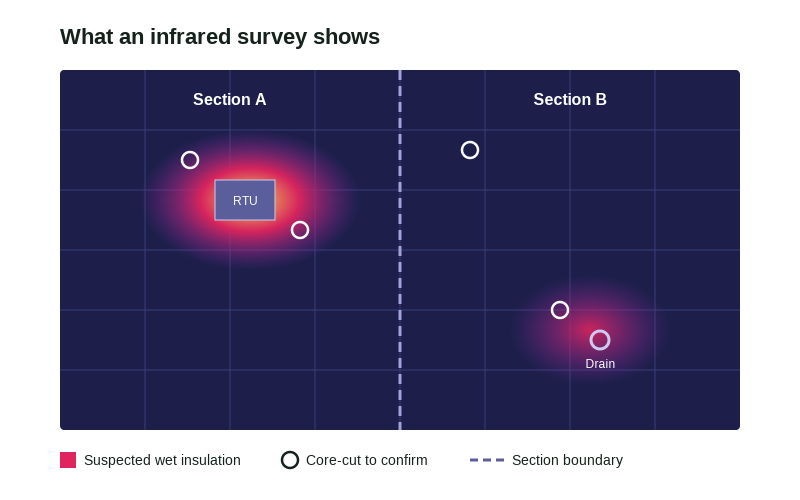
You should get a written report with photos organized by roof section, separating fresh wind damage from older wear. If you have a large roof or many buildings, drone imagery speeds up the perimeter survey. See our roof inspection services, including infrared surveys.
How wind damage is repaired
Good wind damage roof repair fixes the cause, not just the tear you can see:
- Edge metal and coping are re-secured or replaced with a tested edge system. A few screws through bent metal may get through the week, but not the next chinook.
- Membrane is re-attached where it's sound and patched or replaced where it's torn or stretched. TPO takes welded patches; EPDM takes primed, taped patches. Sheets that have been badly stretched usually need to be replaced, not patched.
- Wet insulation and cover board are cut out and replaced before the roof is closed. A patch over wet insulation doesn't fix the leak.
- Flashings and terminations are rebuilt, and rooftop equipment is anchored where it moved.
Sometimes a large section has blown off, or the wind exposed a roof near the end of its life. Then a section or full replacement may make more sense than repair. A re-roof generally needs a permit and has to meet current wind design and energy codes. That can affect your cost and insurance. See commercial roof cost factors and our guide to ordinance or law coverage and code upgrades.
Wind damage, wear and your claim
Insurers separate sudden roof storm damage from wear and age. Edge metal that tore off in a documented windstorm is one thing. Fasteners that rusted loose over years are another. Dated maintenance records, photos of the roof before the storm and a clear storm date all help show what this storm did.
We document wind damage by roof section and prepare a detailed scope of the repair. When you ask us to, we meet the adjuster on the roof. We don't negotiate the claim; that's your role, with your agent or a licensed public adjuster. Policies vary, so read yours and ask your agent what applies. If your community has several damaged buildings, see our guide to association hail and wind claims for deductibles, depreciation and resident updates.
No deductible deals. Truman never pays, waives or rebates a deductible on any job. Colorado's roofing contractor law forbids it on residential property, which can include condo and townhome buildings.
Reducing wind risk before the next storm
Maintenance can't stop a chinook, but it can make sure the roof meets one in good shape:
- Check edge metal, coping joints and fasteners every visit, especially at corners.
- Repair open laps and loose flashings while they're small.
- Redistribute or replace scoured ballast and gravel.
- Make sure rooftop units, hoods and caps are secured, and remove loose materials other trades leave on the roof.
- When you replace the roof, ask for stronger attachment at corners and perimeters and an assembly tested to the required uplift rating.
The NRCA recommends inspecting low-slope roofs twice a year and after severe weather. Our S.M.a.R.T. maintenance program gives you a written report after every visit. If your building sits near the foothills, see our work in Golden and Lakewood. Closer to the Tech Center, see commercial roofing in Centennial. Request a wind damage inspection, or if water is already coming in, report a leak.
Wind damage FAQs
Is wind damage covered the same way as hail damage?
Often, but not always. Many commercial and association policies cover wind and hail together, with the same deductible. Exclusions, deductibles and how roofs are valued vary, so check your policy with your agent.
Can our maintenance staff screw the edge metal back down?
Not from the roof edge without fall protection. A crew can make a temporary repair. A permanent one should restore a tested edge system, because a few screws through bent metal rarely hold through the next windstorm.
Our roof drums or flaps on windy days. Is that a problem?
It can be. Some movement is normal on mechanically attached membranes. Loud billowing, though, usually means air is getting under the sheet through an opening at an edge, seam or penetration. Have it checked before a strong storm finds the opening.
How do you tell wind damage from age?
Fresh wind damage tends to be sudden and directional. Look for torn metal, clean breaks, debris on the ground and damage concentrated at corners and windward edges. Wear shows as rust, brittle sealant and fasteners loosened over time. Our reports note both.
Will you meet our adjuster?
Yes. We meet adjusters on the roof, walk the documented damage and prepare a detailed scope. Negotiating the claim is your role, with your agent or a licensed public adjuster.