
Home / Resources / Spray foam pros and cons
Spray foam roofing pros and cons for commercial buildings
Spray polyurethane foam can turn a tired, leaky low-slope roof into a seamless, insulated one. Often it does that without a tear-off. It also brings a coating that has to be renewed on schedule and an installation that depends on the weather. Here's an honest look at both sides for Colorado commercial and association buildings.
What is a spray foam roof?
A spray polyurethane foam (SPF) roof is made on site. Two liquids are mixed at the spray gun and sprayed onto a prepared roof. Within seconds they expand and cure into rigid, closed-cell foam. The crew builds it up in passes to the thickness the design calls for. The result is one continuous layer with no seams, laps or fastener holes.
Foam can't stay exposed to the sun, so every SPF roof gets a flexible coating on top. It's usually acrylic, silicone or urethane, sometimes with granules broadcast into it. Keep that split in mind, because it explains most of the pros and cons. The foam supplies insulation, shape and waterproofing. The coating protects the foam.
What spray foam benefits can you expect?
No seams, and it flashes itself
Most low-slope leaks start at seams and details. Foam goes on in one piece across the field and straight up curbs, parapets and pipes, so many of the joints where other roofs fail don't exist. That counts on the crowded roofs common in DTC office parks and older retail centers. There, rooftop units, vents and conduit supports leave little open field.
Insulation built into the roof
The foam is continuous insulation over the whole roof, without the joints between rigid boards that let heat escape. On a recover, that adds insulation without tearing anything off. A white acrylic or silicone top coat also reflects summer sun.
It can build slope where water ponds
Because foam goes on in passes, the crew can spray it thicker in low areas to move water toward drains. On a roof where snowmelt sits for days every spring, that can fix a drainage problem a new membrane would only cover. See ponding water on flat roofs for why standing water matters.
Light weight, and often no tear-off
A foam roof weighs far less than a gravel-surfaced built-up roof. It bonds directly to a prepared surface and fills uneven spots, so it often goes over the existing roof. That can be a dry built-up roof once the loose gravel is removed. It can also be the low-slope panels of a metal building, where foam fills the panel profile and seals every fastener and lap. Skipping the tear-off keeps the building drier during the work and avoids most disposal.
It's renewable
When the coating wears, you recoat it instead of replacing the roof. With periodic recoating, a foam roof can last more than 20 years. And if you maintain it, it doesn't have to come off when its first coating wears out.
What are the downsides of spray foam roofing?
The coating is a maintenance item, not a one-time finish
Coatings erode slowly under sun, weather and foot traffic. While enough coating remains, the foam is protected. Once it wears through, UV attacks the foam, which turns brown and powdery and starts to erode.
At a mile of elevation, the sun is stronger than at sea level. Coatings thin fastest on south-facing and high areas and around walk paths. If your organization tends to put off roof maintenance, that's the biggest strike against foam.
Hail and birds damage the surface
Front Range hail season runs from mid-April to mid-August, and hail dents foam. Dents with the coating intact usually aren't a leak risk. Hail that cracks the coating or crushes the foam surface opens it to UV and water. You need to seal and recoat those impacts before they grow. Birds are the other surprise: northern flickers, common along the Front Range, drill into foam, and their holes can go deep.
Installation depends on the weather
Foam needs a dry surface, suitable temperatures and calm enough wind to spray. Here that means planning around spring storms, chinook winds and short winter days, and accepting a schedule that moves when conditions aren't right.
Overspray on busy sites
Foam and coating mist can drift onto cars, windows and neighboring buildings when the wind picks up. You can manage it with wind monitoring and stop rules, screening, protected air intakes and moved parking. But on an occupied office or association property, it takes real planning.
Water that gets in can travel
Closed-cell foam resists water well, but unrepaired punctures, open bird holes, failed details at drains or worn-through coating let it in. It can then spread between the foam and the roof below and cause the foam to lose its bond. Wet sections have to be cut out, dried and replaced before any recoat.
Not every roof qualifies
A recover is only an option when your existing roof is dry and code allows another layer. Codes limit how many roofs a building can have. Raising the surface changes parapet, door threshold and flashing heights. Future recoats also have to be compatible with what's there: silicone, for example, generally needs silicone over it.
Which coating should you choose?
Choosing the coating is where many of these trade-offs get settled:
| Coating | Strengths | Trade-offs |
|---|---|---|
| Acrylic | Reflective white, economical, easy to recoat | Doesn't tolerate standing water well; needs warm, dry weather to cure |
| Silicone | Strong UV resistance; performs well where water ponds | Collects dirt; later recoats generally need to be silicone too |
| Urethane | Tough and abrasion-resistant; good in traffic areas and hail exposure | Often used as a base coat or in walk paths under another topcoat |
Granules in the coating and a tougher base coat can improve hail and traffic resistance. Manufacturer coating warranties are generally tied to the coating type and the thickness applied. Make sure your specification states both.
How does spray foam compare with a single-ply re-roof?
Owners weighing foam are usually also looking at TPO or EPDM. Here's how they differ on the questions that come up most. For all five systems we work on, see our guide to types of commercial roofing systems.
| Question | Spray foam (SPF) | TPO or EPDM |
|---|---|---|
| Seams | None in the field; foam flashes curbs and penetrations | Welded (TPO) or taped (EPDM) seams, plus flashings at every detail |
| Insulation | The foam is the insulation | Separate rigid boards, often tapered to build slope |
| Over an existing roof | Adheres directly to a dry, prepared roof | Recover over a cover board if the old roof is dry and there's only one |
| In hail | Dents; the coating has to stay intact | Depends on cover board, membrane thickness and attachment |
| Main upkeep | Scheduled recoats, coating thickness checks, bird damage | Seam and flashing checks, punctures from other trades |
| Installation limits | Dry surface, suitable temperatures, calm wind, overspray control | Adhesives have temperature limits; welding works in cold with adjustments |
Which roofs are good candidates?
The spray foam advantages above count most on these roofs:
- Dry built-up roofs worn on the surface but sound underneath.
- Low-slope metal buildings with leaking fasteners and laps, common on warehouses and shops.
- Roofs with many penetrations, where self-flashing foam removes a lot of detail work.
- Roofs that pond, where foam can be tapered to drain.
- Buildings that need more insulation without a tear-off.
Look harder at other options when:
- insulation under the existing roof is widely wet
- there are already two roofs
- added height would cause trouble at doors and parapets
- nobody will own the recoat schedule
In those cases a tear-off to TPO or EPDM may serve you better.
What should you check before you approve a foam roof?
Confirm the roof is dry
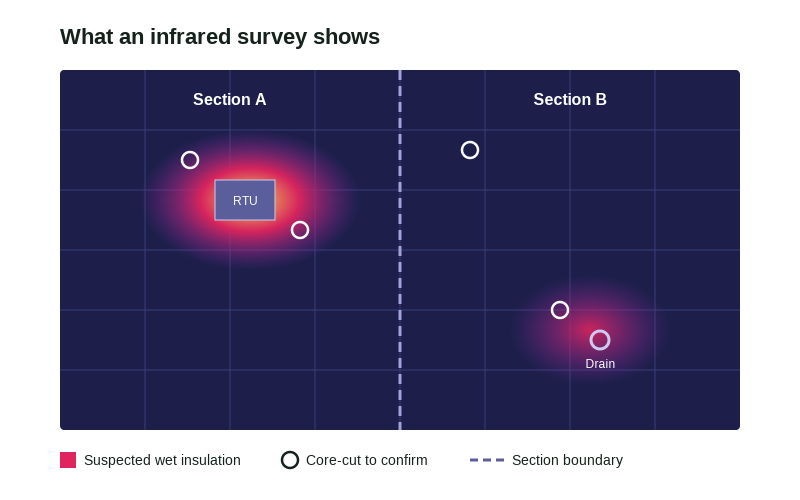
An infrared moisture survey, confirmed with core samples, shows you what's wet. Foam over wet insulation traps the water.
Count the layers
Know how many roofs are already on the building and whether code allows another.
Get the coating in writing
Make sure the proposal names the coating type and the thickness to be applied. It should also cover extra protection in walk paths and how the crew will check thickness.
Plan the site
Ask how overspray, parking, air intakes and tenant or resident notices will be handled, and what the wind stop rules are.
Budget the recoat
Put the next recoat on the calendar now, so it's a planned expense instead of a surprise.
How do you keep a foam roof healthy?
A foam roof needs more regular attention than most systems, because its coating is its protection. NRCA recommends inspecting low-slope roofs at least twice a year and after severe weather. Here that means spring before hail season, fall before freeze-thaw, and a check after any significant hail.
A good visit clears drains and scuppers and looks for punctures and bird damage. It measures coating thickness in the most exposed areas instead of judging it by eye. And it seals small defects before freeze-thaw widens them. Our S.M.a.R.T. maintenance program does this on a schedule. You get a written report and photos after each visit, so you can budget the next recoat years ahead.
What should HOA boards and property managers plan for?
Carry recoats as a recurring item in your reserve plan. Keep the coating type and thickness on file, so the next recoat is specified to match. Plan resident parking and notices around spray days. Where a community has several foam roofs, recoats can be phased across buildings the way replacements are, which spreads the cost.
We inspect, repair and recoat existing foam roofs across the Denver metro, including commercial roofing in Centennial. We also install spray foam as a recover over roofs that qualify. See spray foam roofing and recoating for how we handle it. Or request an inspection, and we'll tell you whether foam fits your roof, with the cost drivers next to the alternatives. If water is coming in now, report a leak or call (720) 296-0000.
Spray foam roofing FAQs
How long does a spray foam roof last?
With periodic recoating it can exceed 20 years. The coating decides it: recoat before the foam is exposed, seal hail fractures and bird holes promptly, and keep water out of the foam. A foam roof whose coating wears through can fail far sooner.
Is spray foam a good roof for hail?
Foam dents, but dents with the coating intact usually aren't a leak risk. What matters is whether the coating fractured. Granule-surfaced coatings and tougher base coats help on a new installation or recoat. After a storm, have impacts tested and documented. Our guide to the first 72 hours after a hailstorm walks you through the first steps.
Can spray foam go over our existing roof?
Often, if the roof is dry, sound and within code limits on layers. Loose gravel comes off and wet areas are removed first, and parapet, threshold and flashing heights have to work with the added thickness.
Will a foam roof lower our energy costs?
It adds continuous insulation, which slows heat flow through the roof in summer and winter, and a white coating reflects summer sun. How much that saves depends on the building, the insulation there now and how the space is heated and cooled.
Can foam be sprayed in winter?
Only when conditions allow: a dry surface, suitable temperatures and calm wind. Short days, snow and chinook winds narrow those windows, so foam work is best planned for the warmer months.
Do you work on foam roofs another contractor installed?
Yes. We inspect, repair and recoat existing SPF roofs no matter who installed them. We test your existing coating first, so the new coating bonds to it.