
Home / Resources / Why hail claims get denied
Why commercial roof hail damage claims get denied
Most denied roof claims don't turn on whether the roof is damaged. They turn on whether anyone can show that this storm caused it. Here are the usual reasons commercial and association hail claims are denied or cut back. You'll also see what you can do about each one as an owner, manager or board.
General guidance, not legal or insurance advice. Every policy and every claim is different. Read your policy with your insurance agent, and call an attorney if you have a coverage dispute.
It usually comes down to one question
Your property policy covers sudden, accidental damage from a covered cause, such as hail. It generally doesn't cover wear, aging or damage from poor maintenance. So the question behind most denials is simple: did this storm cause this damage, or was it something else?
On the Front Range, that question has plenty of possible answers. High-altitude sun ages membranes and sealants. Freeze-thaw opens small breaks. Chinook winds work at edges and seams.
Snow loads and clogged drains leave ponding. And hail season, from mid-April to mid-August, can bring more than one storm to the same roof. Your claim succeeds when the record makes the answer clear.
The common reasons claims are denied or cut back
No clear date of loss
If nobody can say which storm caused the damage, the insurer may question it. Did it happen within the policy period? Did it come from an earlier storm? Is it hail at all? Damage first noticed months later, as a leak, is the classic case.
Late notice
Your policy likely requires prompt notice of a loss, and it may set time limits for filing. Late notice can weaken your claim even when the damage is real. Evidence fades, and later weather blurs the picture.
Wear and age
An adjuster who sees brittle membrane, open seams, failed sealant and old patches may attribute the problems to age rather than hail. Without a record of the roof's condition before the storm, it's hard to separate the two.
Hidden damage that wasn't found
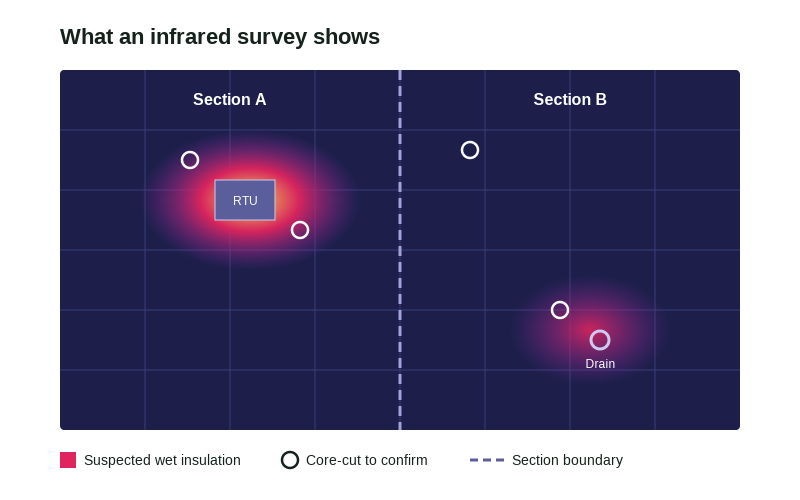
On low-slope roofs, hail often fractures cover board and crushes insulation under a membrane that looks intact. If nobody makes a test cut, the adjuster may see no damage at all. A brief walkover of a large roof can miss a great deal.
Cosmetic damage exclusions
Your policy may limit coverage for cosmetic damage to damage that affects function, especially on metal roofing. A roof covered in dents can still be denied under that wording. Our guide to functional vs cosmetic hail damage explains the difference.
Not protecting the property
Your policy generally expects you to take reasonable steps to prevent further damage. If water damage spread because an active leak was left alone, the insurer can dispute it.
Evidence removed too soon
Permanent repairs made before the adjuster inspects, or damaged parts thrown away, can leave nothing to see.
Damage below the deductible
Strictly speaking, this isn't a denial, but the result is the same: no payment. Percentage deductibles are common on commercial and association policies. So damage that's real but limited may not clear your deductible. See percentage wind and hail deductibles.
Partial approvals
On a multi-building claim, some buildings may be approved and others not. Often those roofs weren't inspected as closely, or the documentation wasn't organized by building.
How to avoid a denial before the storm
- Keep a baseline. Dated photos and reports from spring and fall inspections show the roof's condition before the storm. The NRCA recommends inspecting low-slope roofs twice a year and after severe weather. Our S.M.a.R.T. maintenance program leaves you a written report with photos after every visit.
- Fix maintenance items. Open seams, clogged drains and failed sealant give an adjuster a reason to attribute damage to wear.
- Know your policy. Learn your notice rules, deadlines, wind and hail deductible, cosmetic damage limits and how your roofs are valued.
- Keep roof records together. Installation dates, warranties, repair invoices and roof plans, by building.
How to avoid a denial after the storm
Fix the date
Write down the date, time and largest hail seen. Save the National Weather Service's Storm Prediction Center storm reports for that date, and keep timestamped photos.
Notify promptly
Tell your agent or carrier about the storm as your policy requires. Do it even before you know how bad the damage is.
Get a thorough inspection
You want marked impacts photographed with a scale, test cuts and infrared where water may have entered. Findings should be organized by building and roof section. See our roof inspections and infrared surveys.
Protect the building
Stop active leaks with temporary repairs, and photograph the damage before and after. Keep the invoices.
Hold the evidence
Wait on permanent repairs until the adjuster has inspected, unless waiting would cause more damage. Keep any damaged parts you remove.
Document the whole loss
Rooftop units, skylights, edge metal, gutters and interior damage, not just the membrane.
Be honest about old conditions
A report that separates prior wear from new damage is more credible than one that calls everything hail.
Our guide to documenting hail damage before the adjuster arrives covers each of these in detail. Our checklist for the first 72 hours after a hailstorm covers safety and leaks.
If your claim is denied or cut back
Had a roof insurance claim denied? It isn't always the end of the insurance claim process. Work through it in order:
- Get it in writing. Ask for the decision in writing, with the policy provisions it relies on. Also ask for copies of any adjuster or engineer reports.
- Review it with your agent. Ask your agent what the cited language means and what options your policy gives you.
- Compare it with your documentation. If the decision says no hail damage was found, check whether test cuts were made and whether every roof was inspected.
- Add evidence. More documentation, such as test cuts, infrared findings or pre-storm records, can support your request for a re-inspection.
- Know the dispute options. Your policy may have a dispute process, such as appraisal, for disagreements about the amount of a loss. A licensed public adjuster or an attorney can advise you on it. The Colorado Division of Insurance also accepts consumer complaints about insurers.
Our role is the roof. We can re-inspect, document what's there, and walk the roof with the adjuster or the insurer's engineer at your request. We don't negotiate the claim; that's your role, with your agent or a licensed public adjuster. Our article on what your roofer does at the adjuster meeting explains where that line sits. For multi-building claims, see our association hail claims guide.
Watch for promises
After a denial, some contractors promise they can "get it approved." Others offer to handle the insurance company for you. No contractor can promise an outcome, and negotiating a claim is a licensed role, not a roofer's.
No deductible deals. Truman never pays, waives or rebates a deductible on any job. Colorado's roofing contractor law forbids it on residential property, which can include condo and townhome buildings.
Your best protection is a documented roof. Have it inspected promptly by a local contractor who'll still be here for the warranty. We're based in Centennial, near the Denver Tech Center. We inspect commercial and association roofs across the metro. See our commercial roofing in Centennial and other service areas. Then request a hail damage inspection or call (720) 296-0000.
Denied hail claim FAQs
Why would an adjuster find no damage when our roofer did?
Often because the damage is under the membrane. Fractured cover board and crushed insulation don't show from the surface, so an inspection without test cuts can miss them. Share your documentation with the insurer and ask for a re-inspection.
Does an old roof mean the claim will be denied?
Age alone doesn't decide it. An older roof usually means more depreciation and more questions about wear. That makes your pre-storm records and clear proof of new damage matter more.
Can a denied claim be reconsidered?
Sometimes. You can add evidence, ask for a re-inspection or use the policy's dispute process, if it has one. Your agent, a licensed public adjuster or an attorney can explain your options.
We noticed the leak months after the storm. Is it too late?
Not necessarily, but it's harder. Report it now. Tie the damage to a storm date with weather records and photos. Then check your policy's notice and filing limits with your agent.
Should we hire a public adjuster?
That's your decision. A licensed public adjuster represents you in negotiating the claim, which a roofing contractor doesn't do. Your agent can help you weigh it.