
Home / Resources / Roof before solar
Commercial solar panels: replace or repair the roof first
Solar panels on a commercial roof stay there for a long time. If the roof under the array fails first, the panels have to come off before anyone can fix it. Here's how to decide what the roof needs before commercial solar panels go on, and how to keep it watertight afterward.
Why the roof comes first
Solar developers design arrays around the building's roof, but they don't usually inspect the roof itself in depth. That's the owner's job, and it matters. Once an array is installed, every roofing decision gets harder. Finding a leak under rows of panels is slow. Replacing the roof means paying a solar contractor to remove and reinstall the array. You also pay for the electrical work to disconnect and reconnect it, on top of the roofing itself.
The simplest rule: expect the roof to last at least as long as the array will be on it. If it won't, fix that before the panels go on. We don't install solar. We inspect, repair and replace the roof, and we work alongside your solar contractor so the two systems fit together.
Step 1: what does the roof really have left?
You need more than a walk around the roof for a decision this long. Before solar, get:
- A condition inspection of the field, seams, flashings, drains, edges and penetrations, with photos by section.
- Moisture data. An infrared moisture survey confirmed with core cuts shows whether the insulation is wet. Wet insulation under an array keeps getting worse where nobody can see it.
- Core cuts to confirm how many roofs are on the building, the insulation type and the deck.
- A remaining-life range, with reasons, to compare against the array's planned time on the roof.
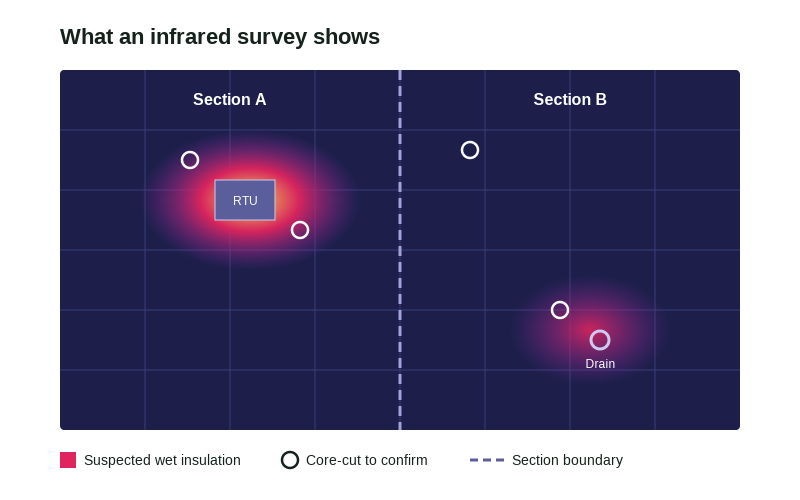
See our inspections and IR surveys for what the report includes.
Step 2: should you repair, recover or replace?
It depends on what the roof shows. Use this table as a starting point:
| What the roof shows | Usual answer before solar |
|---|---|
| Relatively new roof, dry insulation, sound details | Repair any small items, document the condition and protect it during installation |
| Older roof, mostly dry, problems at details | Repairs may hold for now, but compare remaining life with the array's time on the roof honestly |
| Dry insulation, one existing roof, aging membrane | A recover may be an option, if the structure can carry it and code allows another layer |
| Wet insulation in many areas, or two existing roofs | Replace the roof before the array goes on |
Roof replacement before solar often costs less over the life of the array than replacing later around it. The array only has to be installed once. Our commercial roof cost factors guide notes that a solar contractor may need to remove and reinstall the array when a roof is replaced.
Step 3: how do you design the roof for the array?
If the roof is being replaced anyway, build the new one for what's coming:
- A durable surface. Installers and service techs will walk the roof for years. A dense cover board under the membrane resists foot traffic and spreads hail impact.
- Walkway pads along service routes to the array, inverters and rooftop equipment.
- Drainage that still works under the panels. Tapered insulation and crickets should move water to drains that stay reachable for cleaning, not under a row of modules.
- Attachment the array can live with. Ballasted racking adds weight and needs protection pads under it. Attached racking adds penetrations that must be flashed into the roof system.
- A membrane that suits the building. White TPO keeps the roof surface cooler and reflects summer sun. See TPO roofing and energy efficiency from a roof replacement.
Step 4: what do the structure and the codes require?
The solar designer or a structural engineer should confirm the structure can carry the array, the ballast and drifting snow. An array adds load to the roof, and Front Range snow drifts against parapets and around rows of panels add more in winter. Fire codes also set access pathways and setbacks on roofs with solar. The solar designer works these out with the local fire district; in Centennial, that's South Metro Fire Rescue. Permits for the array and for the roof are usually separate, and each city or county sets its own process. See Centennial roofing codes and permits for one example.
Step 5: how do you protect the warranty?
Keep penetrations and attachments within the manufacturer's requirements. Penetrations cut by other trades are one of the most common ways a roof warranty gets voided. Before the solar contractor starts:
- Call the roofer who holds the warranty. Many manufacturers want to be told about rooftop solar and may require approved details for attachments and flashings.
- Have penetrations flashed by a roofer using details that suit your membrane.
- Agree on who is responsible for leaks at array attachments, conduit supports and penetrations, in writing.
- Document the roof before installation with photos, so any damage during installation is easy to identify.
Who does what
| Party | Typical responsibility |
|---|---|
| Roofing contractor | Roof condition, repair or replacement, flashing penetrations, walkway pads, roof warranty |
| Solar contractor | Array design and layout, racking, ballast plan, panels, electrical, array permits |
| Structural engineer | Confirms the building can carry the array, ballast and snow |
| Owner or manager | Sequencing, approvals, lease or association requirements, insurance |
Hold a short meeting with all of them before work starts, on the roof if possible. It settles the order of work, staging, conduit routes and protection of the finished roof.
Questions to ask your solar contractor about the roof
Solar proposals focus on panels, production and electrical work. Before you sign one, ask how the installation will treat the roof:
- Did anyone inspect the roof itself, or only measure it from imagery?
- Is the racking ballasted or attached, and who will flash any penetrations?
- Where will conduit run, and will it sit on supports rather than on the membrane?
- How will installers protect the roof during the work, and who repairs damage they cause?
- Who removes and reinstalls the array if the roof needs major repair later, and how is that priced?
Get clear written answers to these and share them with your roofer. That prevents most of the leaks we see under arrays.
After the array is installed
The roof under an array still needs care, and it's harder to see. NRCA recommends inspecting low-slope roofs at least twice a year and after severe weather. On a roof with solar, those visits should look for:
- Screws, clips and debris left behind by installers or service crews
- Wear under ballast and at racking feet
- Drains and scuppers clogged with leaves and debris that collect under panels
- Conduit resting directly on the membrane instead of on supports
- Hail and wind damage to both the array and the roof after a storm
Our S.M.a.R.T. maintenance program checks what other trades left behind, including solar work, on every visit. After hail, ask your agent how your policy treats the roof and the array. They may be separate items in a claim.
For HOA and multifamily communities
Solar on association buildings adds approvals: your governing documents and design guidelines, plus whoever maintains the roofs. If roofs are already on a phased replacement schedule, put solar on the buildings with new roofs first. See phasing a roof replacement and roof capital planning.
We check roofs before solar for commercial and association buildings across the Denver metro, from DTC office buildings to warehouses in Commerce City. See commercial roofing in Centennial for our home base, or the commercial roof systems we install. Andrew Rickert, our Operations Manager and a CPA, leads estimating; meet him and the rest of our team. Request an inspection before you sign the solar agreement, and you'll know whether the roof is ready.
Roof and solar FAQs
Should we replace our roof before installing solar panels?
If the roof isn't expected to last as long as the array will be on it, yes. Replacing it later means removing and reinstalling the array. An inspection with moisture data tells you where your roof stands.
Do you install solar panels?
No. We inspect, repair and replace the roof, flash penetrations and work alongside your solar contractor.
Will solar panels void our roof warranty?
They can if attachments and penetrations aren't done to the manufacturer's requirements. Call the roofer who holds the warranty before installation starts.
Can our roof structure handle a solar array?
That's a question for the solar designer or a structural engineer, who should account for the array, any ballast and drifting snow.
How do you maintain a roof under solar panels?
With scheduled inspections. They look for debris, clogged drains, wear under ballast and racking, and anything service crews left behind. Add a check after hail or high wind.